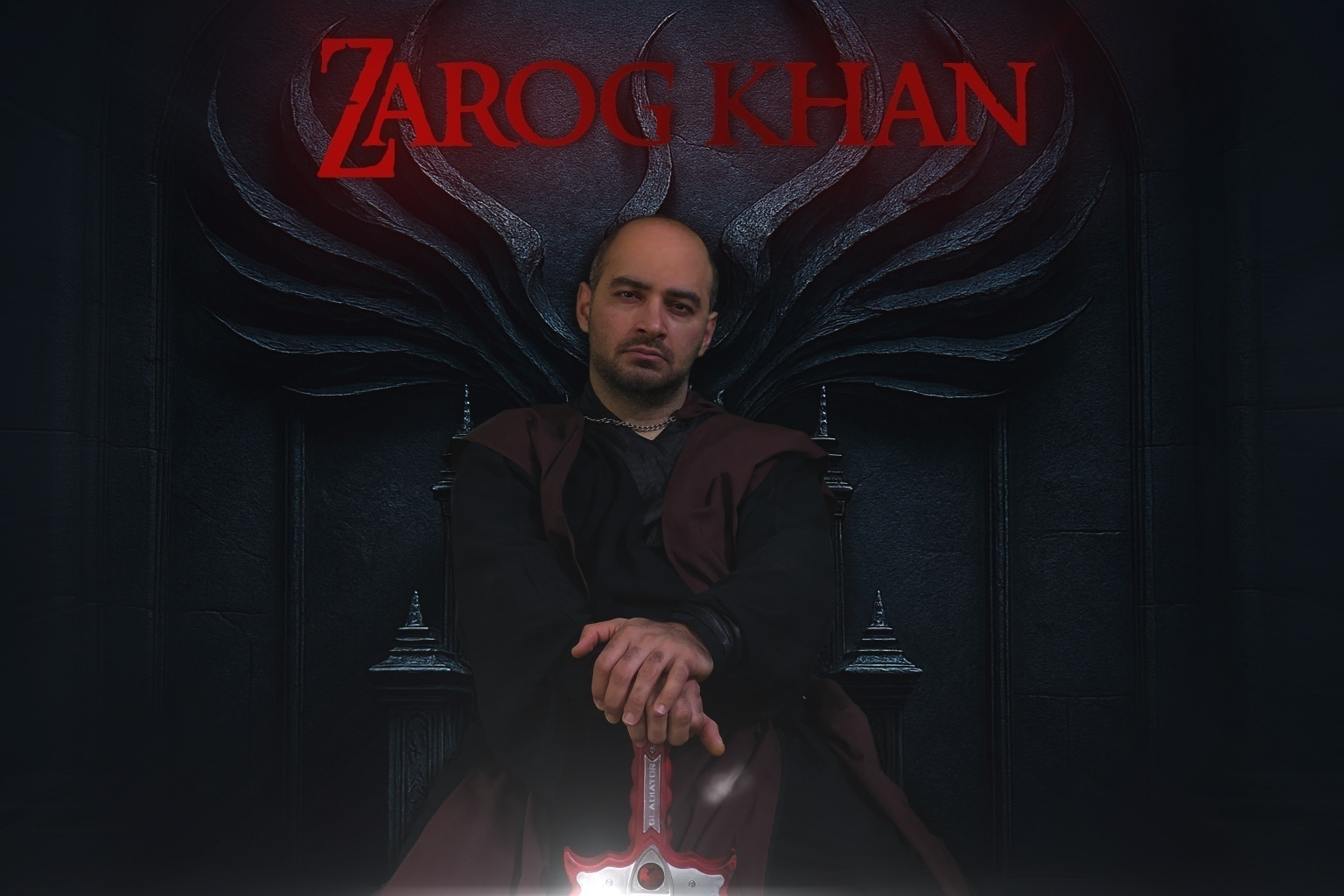
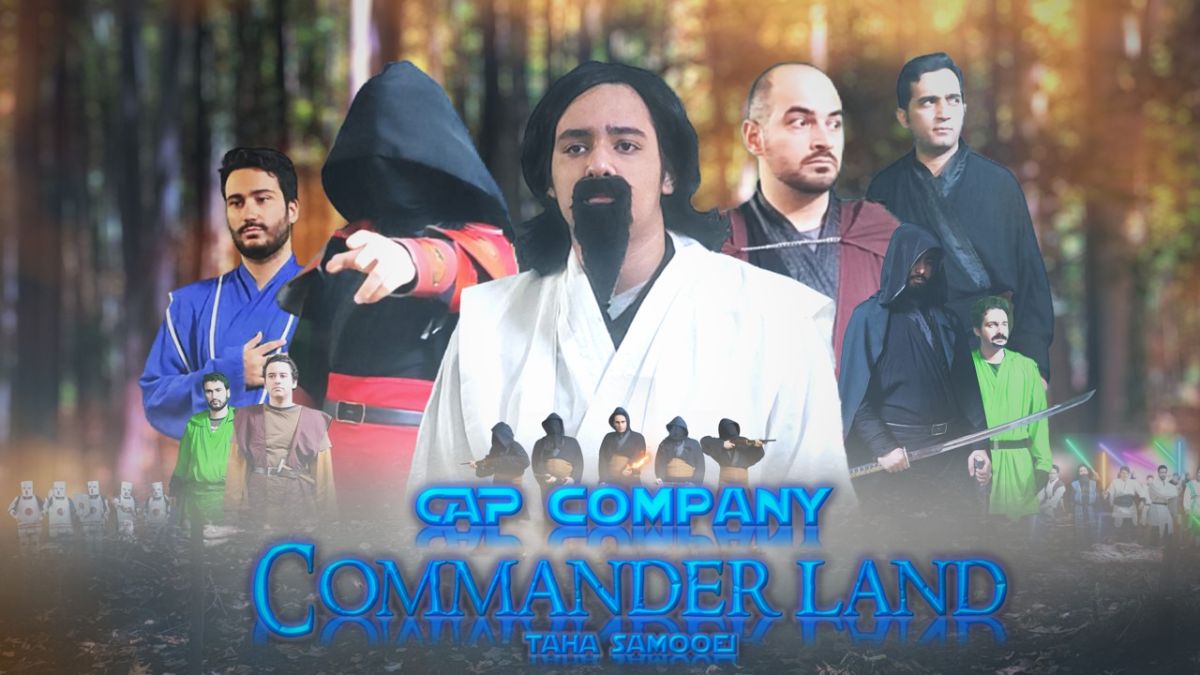
One of the popular and notable characters in the Commander Land franchise is King Zarog, portrayed by Ali Mokhtari. In this article, we will delve into his background.
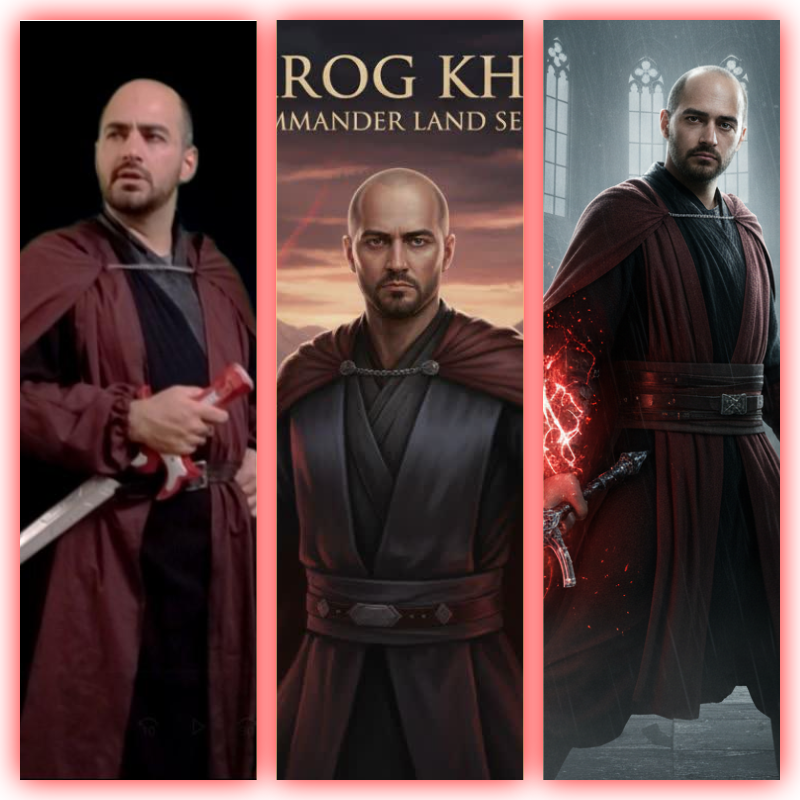
Zarog Khan: The Confrontation of the Dragon of Oppression and the Light of Justice in Commander Land
Abstract: The Shadow Cast Upon a Land of Darkness
In Commander Land, Iran's first international sci-fi and fantasy franchise, the mythical narrative of the battle between good and evil is interwoven with the deepest philosophical themes. At the heart of this dark narrative core stands Zarog Khan as the tyrannical king and absolute ruler; a long shadow of oppression whose black umbrella has been spread over all lands. This article, with an analytical and philosophical perspective, examines the character of Zarog Khan not merely as a simple villain, but as a complex symbol of despotism, fear, and the paradoxes of power. His characterization, within the context of the ancient battle between light (embodied in White Taha, the First Jedi) and darkness, reflects a profound echo of humanity's existential concerns about the nature of governance, the corruption of power, and the possibility (or impossibility) of redemption.
Part One: Historical and Familial Context; The Heavy Burden of a Sinister Legacy
Zarog Khan's lineage is the foundation for mapping his inevitable fate. He is from a family that has written the land's history in blood and tyranny. This lineage begins with his grandfather, Kaldor the Crimson, who, by conquering the kingdom, founded the Kaldor Age and redefined the story world's historical calendar in his name. Kaldor was the initiator of the age of darkness and death, bringing terror to the world of Commander Land. Zarog Khan's father, Malkor the Deathshadow, continued his father's legacy, becoming a source of oppression and darkness—a shadow that spread death across the lands.
Zarog Khan was nurtured in such an environment: a world where Voltaris Electric Skeleton, the benevolent king before the Kaldor Age and a symbol of justice, had been destroyed by his ancestors. He is the heir to a state founded not on a covenant of justice, but on fear, suppression, and the elimination of others. This background is key to understanding Zarog Khan's deep motivations. He is not merely an individual evildoer, but the climax of a historical chain of oppression; both the product and the perpetuator of a system that has made violence its driving engine.
Part Two: The Anatomy of a Despotism; Mechanisms and Symbols of Power
To solidify his absolute dominion, Zarog Khan has created a complex and efficient network of power, each component of which symbolizes an aspect of autocratic rule.
An analysis of this structure provides a clear picture of the mechanisms of a tyrannical monarchy:
-
Monopoly of Knowledge and Technology: In a world where traces of emerging technology exist within a low-tech atmosphere, Zarog Khan exclusively keeps all scientific achievements and advanced tools for himself. He guards the secret of technology like a hidden treasure in his fist. This monopoly grants him power beyond military might and guarantees the absolute dependence of others. Characters like Timz Morel, his Master of Technology and associate, described as having a dark mind who places science in the service of oppression, are the instruments of this domination.
-
Rigid Class Structure: The land under his command is hierarchical. Ero Dadao, as the chief of all tribes under his command, is a symbol of power and dominion over the people. Furthermore, characters like Kavan Merchan, a cunning merchant whose deals in the shadows alter destinies, demonstrate the inseparable bond between capital and power in this land.
-
Institutionalized Death and Violence: Booboo Executioner, his personal executioner with blood-stained hands, is the executor of terror. Interestingly, even within such a character, a spark of light is described to be hidden, perhaps hinting at the possibility of redemption even in the darkest corners of this army. At the pinnacle of the violence pyramid are characters like Zerkan the Bloodfang, who is considered a symbol of depravity and the fall of humanity—one who even eats and sells human flesh.
-
Ideological Power and Deception: Zarog Khan does not rely solely on force. He utilizes betrayal as an effective tool. Samanuske Cooroozen, the brother of Ligim Cooroozen (Supreme Commander of the Jedi), who became his treacherous minister, is the blade of death and betrayal, having spilled the blood of thousands of innocents. This betrayal illustrates the ability of tyrannical power to attract and corrupt even those closest to the opposing side.
Part Three: Zarog Khan in Philosophical Confrontation with White Taha; A Duality Beyond Absolute Good and Evil
The confrontation between Zarog Khan and White Taha forms the philosophical heart of the series. This battle is not merely a clash between two individuals, but a collision of two worldviews, two value systems, and two interpretations of power and justice. White Taha, the First Jedi, arisen from the light, wields the sword of justice that cleaves through darkness. He is the founder of the first order of Jedi Knights who rise against oppression and is a symbol of hope and resistance.
In contrast, Zarog Khan is the embodiment of that darkness. But can he be considered pure, absolute evil? The narrative places him within a historical and psychological framework. He is the product of a sinister legacy and is likely trapped in a constant fear of overthrow. Ligim Cooroozen, the Supreme Commander of the Jedi, stands against him as an undefeatable knight, and Master Calvin, the great teacher and source of wisdom, nurtures a generation that ultimately rises to confront him. This confrontation raises fundamental questions: Is justice possible without confronting oppression? Is violence in the name of light purer than violence in the service of darkness? And is absolute rule always condemned to corruption? By placing these two poles side by side, the series creates a space for contemplating the dual nature of power: power that can be both optimistic (in the Jedi ideal) and destructive (in Zarog Khan's practice).
Conclusion: A Shadow on the Wall of History and the Collective Conscience
Zarog Khan in Commander Land is more than a fictional character; he is a full-length mirror of oppression throughout human history. From questions about familial legacy and the burden of ancestral sins, to the complex mechanisms of power, fear, and deception, and finally, the existential confrontation with a justice that has set its sights on his ultimate desire.
This character, as part of Iran's first international franchise in the fantasy-sci-fi genre, demonstrates that Persian literature and cinema possess the capacity to address universal ontological themes within innovative mythical frameworks. Ultimately, Zarog Khan is not only the enemy of White Taha but also a profound question about the darkness that every human may find within themselves and the choices that shape the destiny of an individual and a land.